INTRODUCTION: The Reality of "Net Savings"
In 2026, the success of dental tourism is not measured by how much you save when you leave the clinic, but by how much money you still have in your account five years later. The volatility of biological risk is the only factor that can turn a 70% savings into a financial loss.
- Verified Data: While an All-on-4 treatment in the US averages $25,000 USD, in destinations such as Mexico or Colombia the cost ranges between $7,000 and $10,000 USD.
- The Risk: An osseointegration failure (2–5% probability according to the AAID) detected after returning to your home country can cost $6,000 USD in local repairs if you lack proper coverage.
MODULE 1: STRATEGIC POLICY ANALYSIS
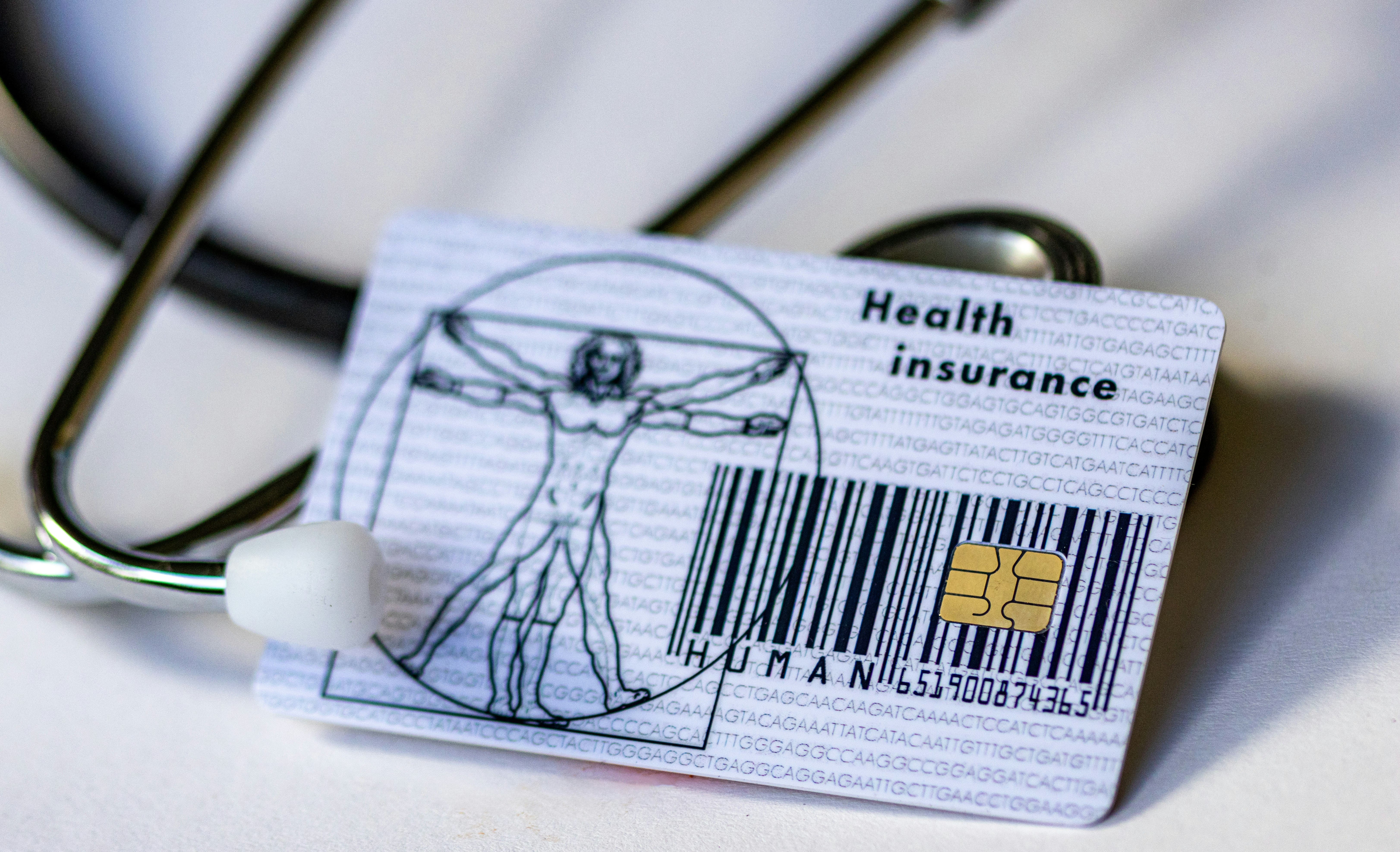
1.1 The ROI of Insurance (Return on Investment)
Insurance is not an operating expense; it is a Stop-Loss tool.
- Average Premium: $180 – $480 USD (annual coverage).
- Protected Capital: Up to $50,000 USD for complex treatments.
- Confidence Level: High. For less than 2% of the treatment value, you transfer 100% of the financial risk arising from clinical complications.
1.2 The "Shielded Savings" Matrix
Dental tourism must be executed under the principle of capital preservation. This manual ensures that, in the event of a contingency, the patient never has to pay twice for the same tooth.
MODULE 2: TECHNICAL ANATOMY & POWER CLAUSES
2.1 Why your common travel insurance will fail
Companies like Allianz or World Nomads explicitly exclude "Medical Tourism". In their contracts, any complication arising from planned surgery is considered a "willful exclusion", leaving the patient unprotected.
2.2 The 3 Golden Clauses for 2026:
- Remedial Care in Home Country (Local Remedial Care): The most valuable clause. Allows you, in case of infection or misalignment upon returning home, to visit a high-end local dentist, with the insurer covering the costs (avoiding emergency flights).
- Retreatment & Travel Benefit: If the failure requires returning to the original clinic, the insurance covers flights and accommodation for you and, in Premium policies, for one companion.
- Local Emergency Stabilization: Covers immediate interventions (incisions for abscesses or urgent recementation) up to a limit of $500–$1,000 USD without prolonged prior authorization.
MODULE 3: TECHNICAL VERIFICATION BY PROCEDURE
3.1 Implants: The Osseointegration Challenge
Risk: Peri-implantitis and biological rejection usually manifest between 3 and 8 months post-surgery.
Material Verification: Demand Titanium Grade 4 or 5 (Ti-6Al-4V) or Zirconia (ISO 13356). Request brands with "Global Warranty" (Straumann, Nobel Biocare, Zimmer) so any dentist worldwide has the tools to intervene on your implant.
3.2 Aesthetics: Veneers and Crowns
Risk: Fracture due to traumatic occlusion or decementation.
Strategy: Ensure your policy covers "local occlusion adjustment". A 1-millimeter misalignment can fracture a $10,000 job in one week.
MODULE 4: "ZERO EXCUSES" DOCUMENTATION PROTOCOL
Insurers deny 70% of claims due to lack of evidence. You must demand the "Dental Passport 2026" before leaving the clinic:
- Traceability Sheet: Original stickers with QR codes / Lot number of each component used.
- Digital Radiographic Report (Pre/Post): Periapical X-rays proving implants were stable and crowns sealed at discharge.
- Autoclave Log: Proof that the instruments used in your surgery underwent a verified sterilization process that day (shield against infections).
MODULE 5: STEP-BY-STEP CLAIMS PROTOCOL
5.1 The "Prior Authorization" Principle
Never pay for a local repair without calling the 24/7 assistance line.
- Action: Obtain a claim number.
- Evidence: Take macro photos of the complication (swelling, fallen crown).
5.2 Communication with the Medical Expert
Do not use subjective terms ("I don’t like it", "it hurts a little"). Use technical terminology: "I present a documented clinical complication: prosthetic abutment mobility / radiographic signs of peri-implant bone loss".
MODULE 6: 2026 SAFETY & INSURANCE GLOSSARY
Before purchasing any protection policy for your dental trip, you must master these three critical concepts. An error in these terms can invalidate your coverage completely:
- Waiting Period: It is the time (usually between 24 and 48 hours) that elapses from the moment you purchase the policy until the coverage becomes active. Golden Rule: Do not board the plane before this period expires. If you suffer a mishap during the journey and your waiting period has not ended, the insurance will not cover a single cent of the subsequent treatment.
- Deductible: It is the fixed amount you assume (we recommend choosing policies with a $100 USD deductible) to activate coverage that can reach $50,000 USD. It is preferable to pay a small initial amount in exchange for the insurance directly managing high-cost hospital or surgical payments.
- ICD-10 / ICD-11 (International Codes): These are universal medical diagnostic codes. For your international insurance or your home country's insurance to process any claim, it is mandatory that your local invoice includes these codes. Without the correct ICD-10 code, your invoice is just a piece of paper with no legal validity for insurers in 2026.
MODULE 7: THE 2026 SAFETY FRAMEWORK & SURGEON AUDIT
Flying abroad for surgery requires more than a good price; it requires an active defense system. This chapter merges traveler safety logistics with the technical audit of the surgeon. Before transferring a single dollar to any clinic, use this two-step protocol:
STEP 1: THE SHIELDED TRAVELER (Pre-Flight Verification)
Before booking your flight, verify these 6 logistical safety pillars:
- Direct Surgeon Communication: Demand a video call with the surgeon who will operate on you. Avoid speaking only with sales agents. If the doctor doesn't have 15 minutes for your case now, they won't have them if a complication arises.
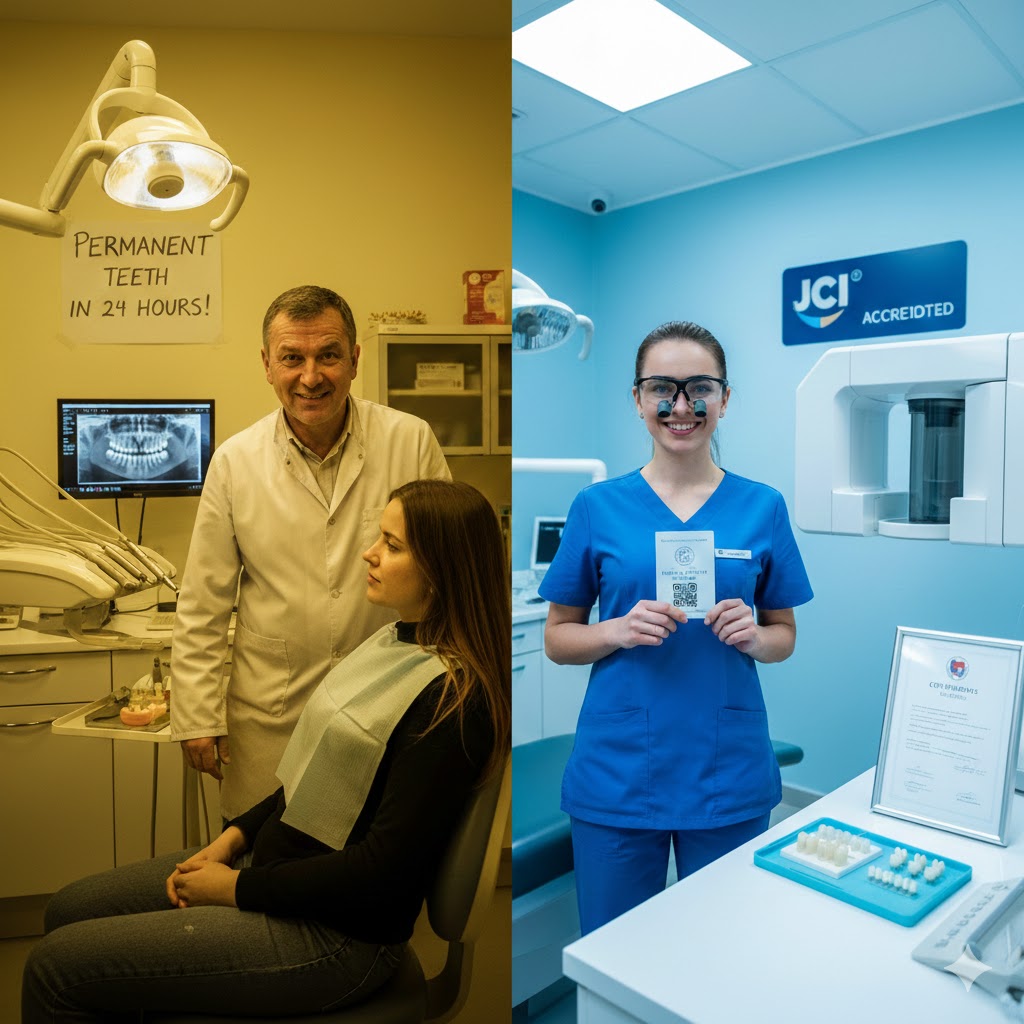
- JCI & National Accreditation: Confirm if the clinic holds Joint Commission International (JCI) accreditation or its verified national equivalent. Do not accept promises; ask for the registration number.
- CBCT Scan Mandatory: Never accept a treatment plan based only on 2D X-rays (panoramic). For implants or bone surgery, a 3D scan (CBCT) is mandatory to avoid nerve damage.
- In-House CAD/CAM Lab: Prioritize clinics with an in-house laboratory. On-site digital technology ensures superior crown fit and drastically reduces the risk of infection due to misfits.
- Insurance Specifics: Verify that your policy explicitly includes the clause: "Complications of Planned Dental Treatments Overseas". Without this, any biological failure will be an out-of-pocket expense.
- Emergency Case Manager: Ensure you have the direct 24/7 contact of a case manager from your insurance in the destination country. Do not wait until you have an emergency to know who to call.
STEP 2: THE 10-POINT SURGEON AUDIT (Clinical Deep-Dive)
Once in contact with the medical team, audit their competence with these 10 technical points:
- Credentials: Verify that the surgeon is a specialist in Oral Surgery, Maxillofacial Surgery, or Periodontics, with current certifications from their national board.
- Case Documentation: Request "before and after" photos of cases identical to yours. Look for long-term results (2-3 years later).
- Global Brands: Confirm the use of brands with global traceability (Straumann, Nobel Biocare, Zimmer). This guarantees that any dentist in your country has the tools to provide maintenance.
- Sterilization Logs: You have the right to request the autoclave logs for the day. Transparency in sterilization is the mark of an elite clinic.
- Surgical Planning: Ask if they use 3D-printed surgical guides. This reduces human error in implant positioning.
- Complication Protocol: Ask directly: "What is your failure rate for this treatment and what protocol do you follow if the implant does not integrate?".
- Written Warranty: The contract must specify what the warranty covers: materials (lifetime), labor (5-10 years), and who pays for flights if a return is necessary due to a clinical error.
- Local Health Authority: Verify that the clinic has no open sanctions with the local ministry of health.
- Post-Op Continuity: Demand a written protocol for postoperative care and how remote follow-up will be conducted once you return home.
- ADA Codes for Insurance: Request an itemized quote with ADA procedure codes. This is vital if you plan to claim reimbursement from your PPO/DPO insurance in the US, Canada, or Europe.
MODULE 8: DISCLAIMERS & LEGAL FRAMEWORK
LIMITATION OF LIABILITY (YMYL - Your Money Your Life): This dossier is an educational benchmarking tool based on January 2026 dental industry standards.
- Independent Verification: We do not receive commissions from clinics. Our data is independent.
- Biological Variance: Success rates (95–98%) are subject to individual health factors (diabetes, smoking).
- Financial Responsibility: While we provide the 10-point audit, the final decision to undergo surgery remains 100% with the patient.
- Last Update: Verified January 15, 2026.
Last verified update: January 2026
Verification Sources: ADA (American Dental Association), AAID, JCI Standards.
This manual is intellectual property designed for global patient protection. Its use ensures a dental tourism experience based on science and financial security.
This manual is a live document updated for 2026 standards. Start your journey by browsing clinics that meet these technical requirements.
Access Audited Clinics Database →